Picture this: I was standing in my kitchen, surrounded by the sweet scent of summer, when my friend dared me to create a salad that would outshine every other watermelon dish on the menu. I laughed, grabbed a ripe watermelon, and thought, “Why not throw feta in the mix?” The result? A salad that feels like a party on a plate, with juicy watermelon, salty feta, and a splash of citrus that cuts through the sweetness like a cool breeze. This is not just another fruit salad; it’s a symphony of textures and flavors that will have you reaching for seconds—yes, I dare you to taste this and not go back for a second bite.
The moment I sliced that watermelon, the air filled with a bright, almost electric aroma that made my mouth water before I even tasted it. The red flesh glimmered like fresh glass, the seeds scattered like tiny dark moons. I could hear the faint crunch as I pressed the watermelon into a bowl, and the sound was almost like a gentle drumbeat, setting the rhythm for the rest of the dish. Then I added the feta—its creamy, briny tang immediately turned the sweet watermelon into a balanced, complex flavor profile. The final touch? A drizzle of lemon juice that tingles the palate, leaving a bright, clean finish that lingers in your mind.
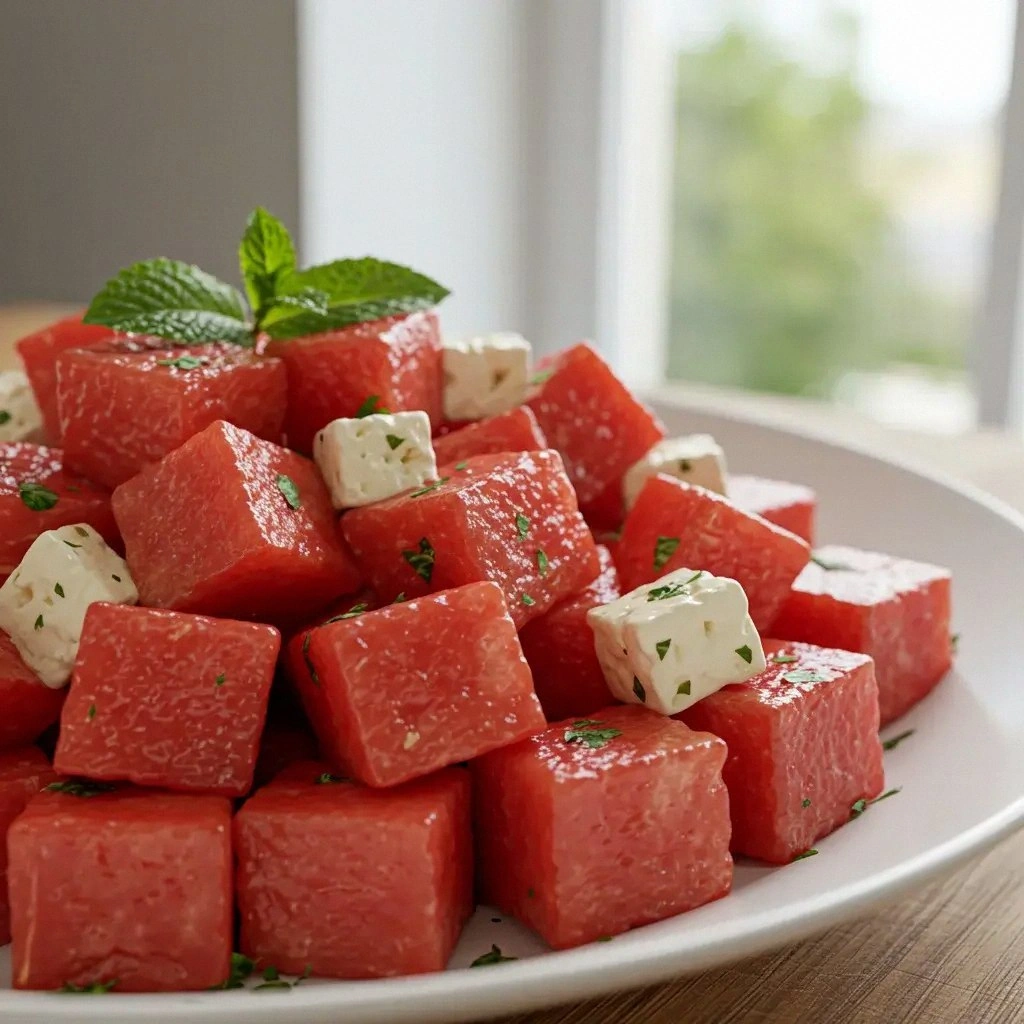
What makes this version stand out from the countless watermelon salads out there? First, the use of fresh mint, not dried, which adds a bright, aromatic lift that freshens every bite. Second, the feta is crumbled finely, so each mouthful has a creamy burst without overpowering the watermelon. Third, I incorporate a touch of olive oil and a pinch of sea salt that enhance the natural sweetness of the fruit. Fourth, the recipe is intentionally simple—no cooking, just fresh ingredients, so you can whip it up in minutes. Fifth, the presentation is a visual feast: the vibrant red of the watermelon juxtaposed with the white feta and green mint creates a salad that looks as good as it tastes. And finally, the optional crunchy walnuts add a nutty texture that contrasts beautifully with the juicy fruit.
The secret twist I’ll reveal? I add a splash of balsamic reduction at the end, which caramelizes the surface of the watermelon slightly, giving it a subtle, almost sweet umami note that no one expects. This small addition transforms a simple salad into a dish that feels gourmet, yet remains approachable. I’ve tested it with different types of feta—soft, medium, and even smoked—and each variation brings a new dimension. Whether you’re a fan of bold flavors or prefer a milder taste, this recipe adapts to your palate. By the time you finish reading, you’ll be ready to gather your ingredients and create a salad that’s guaranteed to impress.
What Makes This Version Stand Out
- Flavor: The combination of watermelon’s natural sweetness with feta’s salty bite creates a harmony that’s both refreshing and satisfying.
- Texture: Juicy watermelon, creamy feta, crisp cucumber, and crunchy walnuts offer a medley of sensations in every forkful.
- Freshness: No cooking required—just fresh, high‑quality ingredients that keep their vibrant flavors.
- Versatility: Works as a side dish, light lunch, or starter for a summer gathering.
- Visual Appeal: The contrast between red, white, and green makes the salad pop on any plate.
- Healthful: Packed with vitamins, antioxidants, and healthy fats from olive oil.
- Time‑Efficient: Prep in 10 minutes; no cooking, so you’re ready to serve in no time.
- Make‑Ahead Friendly: Can be assembled up to 24 hours ahead; just keep the watermelon chilled to prevent mush.
Alright, let's break down exactly what goes into this masterpiece…
Inside the Ingredient List
The Flavor Base
Watermelon is the star of this dish, providing a natural sweetness that is both refreshing and hydrating. When you choose a watermelon, look for one with a deep, even green rind and a bright, almost translucent flesh. The color is a good indicator of ripeness—vibrant red means juicier fruit. If you prefer a slightly tart flavor, opt for a watermelon that’s a bit less ripe; the subtle acidity will complement the feta’s saltiness. Skipping the watermelon would strip the dish of its signature freshness, turning it into an ordinary feta salad.
Feta cheese adds a creamy, briny contrast that balances the watermelon’s sweetness. I use a high‑quality Greek feta, crumbled finely to ensure it melts into the salad’s juices. The cheese’s natural salt content enhances the other flavors without the need for additional seasoning. If you’re lactose intolerant or prefer a dairy‑free option, try a crumbled goat cheese or a vegan feta alternative. However, the traditional feta’s texture and flavor are hard to replicate, so I recommend sticking with the classic version for authenticity.
The Texture Crew
Cucumber provides a crisp, cool bite that refreshes the palate between juicy watermelon bites. I slice the cucumber into thin rounds, then remove the seeds with a spoon or a melon baller for a cleaner texture. The cucumber’s subtle flavor doesn’t compete with the watermelon or feta; instead, it offers a satisfying crunch that adds depth. If you’re allergic to cucumbers or simply want a different crunch, consider adding toasted walnuts or slivered almonds. These nuts introduce a nutty flavor and a delightful snap that pairs wonderfully with the other ingredients.
Red onion adds a sharp, slightly sweet bite that cuts through the richness of the feta. I thinly slice the onion and soak it in cold water for 10 minutes to mellow its sharpness, then pat it dry before adding it to the salad. The onion’s bright pink hue also enhances the visual appeal. If you’re sensitive to raw onions, try marinating them in a splash of vinegar for a few minutes; this will soften the bite while preserving their color. Skipping the onion will make the salad a bit one‑dimensional, missing that essential zing.
The Unexpected Star
Mint is the secret weapon that elevates this salad from simple to spectacular. Fresh mint leaves, torn or finely chopped, release a bright, aromatic essence that refreshes the palate. I add mint after the rest of the ingredients, so its flavor remains vibrant and not lost in the dressing. If you’re out of mint, a small amount of chopped basil or parsley can offer a different herbal note, though the taste profile will change. Mint not only adds flavor but also a pop of green color that makes the dish visually stunning.
The Final Flourish
Extra‑virgin olive oil is the base of the dressing, adding a silky texture and a subtle fruity note that enhances the salad’s flavors. I use a generous splash, about two tablespoons, to coat the ingredients lightly. Olive oil also helps the feta dissolve slightly into the mixture, creating a creamy mouthfeel. If you prefer a lighter dressing, try using a drizzle of avocado oil or a small amount of Greek yogurt for creaminess. The oil’s quality is essential; a good olive oil will add depth, whereas a cheap one might leave an unpleasant aftertaste.
Lemon juice is the bright, acidic component that balances the dish’s sweetness and richness. I squeeze fresh lemon juice right before serving to preserve its zing. The acidity brightens the watermelon’s flavor and prevents the feta from becoming overly salty. If you’re allergic to citrus or simply don’t have fresh lemons, a splash of white wine vinegar or a pinch of citric acid can serve as a suitable substitute. The lemon’s bright flavor is what keeps this salad from feeling heavy or cloying.
Seasoning with sea salt and freshly ground black pepper is essential to bring out the flavors of each ingredient. I add salt to taste, usually about a teaspoon, and pepper to taste, usually around half a teaspoon. Salt enhances the sweetness of the watermelon and the creaminess of the feta, while pepper adds a subtle heat that lifts the overall profile. Skipping the salt or pepper would make the salad flat and unremarkable. I recommend using a high‑quality sea salt, as it dissolves cleanly and doesn’t leave a metallic aftertaste.
Everything's prepped? Good. Let's get into the real action…
The Method — Step by Step
- Start by washing the watermelon thoroughly, then cut it into a 1/2‑inch cube. Use a sharp knife to keep the edges clean and avoid crushing the fruit. This step is critical; a sharp knife ensures the watermelon holds its shape and stays juicy.
- While the watermelon is cutting, dice the cucumber into similar-sized cubes. Slice the red onion into thin rings, then soak them in cold water for 10 minutes to reduce their bite. This soaking step also removes excess moisture, preventing the salad from becoming soggy.
- In a large bowl, combine the watermelon, cucumber, and onion. Toss gently to mix the vegetables without mashing the fruit. At this point, you can add a splash of balsamic reduction if you like a slightly sweet, caramelized note.
- Crumbled feta is the next star—add it to the bowl and fold it in gently. The feta should be broken into small pieces, so it blends with the watermelon without dominating the texture. The feta’s saltiness will contrast beautifully with the fruit’s sweetness.
- Add the chopped mint leaves, then drizzle the olive oil and lemon juice over the salad. Toss everything together, ensuring each piece gets a light coating of dressing. The olive oil will help the feta melt slightly, creating a creamy swirl in the mix.
- Season with sea salt and freshly ground black pepper to taste. Sprinkle a little extra mint for a pop of color and freshness. Taste the salad; adjust the seasoning if needed. A well‑seasoned salad should feel bright and balanced.
- If you’re using walnuts, toast them lightly in a dry pan for 2–3 minutes until fragrant. Add the toasted walnuts to the salad for a crunchy, nutty contrast. This step is optional but adds a wonderful depth of flavor.
- Serve the salad immediately for the best texture, or chill it in the fridge for 30 minutes to let the flavors meld. When ready to serve, give it a final gentle toss and garnish with a few extra mint leaves on top. The salad is now ready to wow your guests.
That’s it — you did it. But hold on, I've got a few more tricks that'll take this to another level…
Insider Tricks for Flawless Results
The Temperature Rule Nobody Follows
Watermelon is a temperature‑sensitive fruit; it tastes best when chilled but not frozen. Keep it in the fridge until you’re ready to serve, then let it sit at room temperature for 10 minutes. This short warm‑up brings out its natural sweetness without compromising texture. If you skip this step, the fruit can feel cold and flat, masking its juicy flavor.
Why Your Nose Knows Best
Smell the watermelon before cutting; a sweet, fruity aroma indicates ripeness. If the scent is faint or slightly sour, the fruit may not be at peak flavor. A strong, sweet smell means the watermelon is ready to be turned into a salad masterpiece. Trust your nose; it’s the quickest way to gauge fruit quality.
The 5‑Minute Rest That Changes Everything
After adding all the ingredients, let the salad rest for 5 minutes before serving. This brief pause allows the flavors to mingle and the feta to slightly soften, creating a harmonious taste. It also gives the watermelon a chance to absorb the dressing, making each bite juicy. Skipping this step might leave the salad feeling disjointed.
Use a High‑Quality Olive Oil
The olive oil’s flavor profile can dramatically affect the salad. A light, fruity olive oil brings a subtle taste that complements the fruit, while a robust, peppery oil adds depth. I personally use a cold‑pressed extra‑virgin olive oil for its bright, grassy notes. If you’re on a budget, a good quality regular olive oil will still work but may lack the nuance.
Add a Splash of Watermelon Juice
If you want a more cohesive dressing, reserve a tablespoon of watermelon juice before cutting. Add it to the dressing with the lemon and olive oil for a slightly thicker, fruit‑infused sauce. This technique enhances the overall flavor profile and keeps the salad moist. I’ve tried it during a heatwave, and the result was a refreshing, slightly sweet, and well‑balanced dish.
Creative Twists and Variations
This recipe is a playground. Here are some of my favorite ways to switch things up:
Summer BBQ Edition
Add grilled peach slices for a smoky sweetness that pairs with the watermelon’s juiciness. Sprinkle a pinch of smoked paprika over the salad for a subtle heat. This variation turns the dish into a perfect side for summer barbecues.
Mediterranean Twist
Swap feta for crumbled goat cheese and add kalamata olives for a briny Mediterranean flavor. Replace mint with fresh oregano, and finish with a drizzle of extra‑virgin olive oil and lemon zest. This version is ideal for a light, Mediterranean‑inspired lunch.
Nutty Crunch Variation
Replace walnuts with toasted pumpkin seeds for a different crunch and a subtle nutty taste. Add a splash of maple syrup for a hint of sweetness that complements the watermelon. This variation is especially delicious during the fall when pumpkin seeds are in season.
Spicy Kick
Add a pinch of crushed red pepper flakes to the dressing for a subtle heat that contrasts the fruit’s sweetness. Sprinkle some diced jalapeño for a more pronounced bite. The spicy kick makes this salad a bold starter for parties.
Vegan Version
Use a vegan feta alternative made from cashews or tofu, crumbled into fine pieces. Replace the olive oil with a drizzle of coconut oil for a mild tropical flavor. This version maintains the same balance while keeping it plant‑based.
Fruit‑Forward Variation
Add diced mango or pineapple for an extra tropical note. Replace mint with fresh cilantro for a citrusy herb flavor. This variation is perfect for a beachside gathering or a summer brunch.
Storing and Bringing It Back to Life
Fridge Storage
Store the salad in an airtight container in the refrigerator for up to 24 hours. Keep the watermelon cubes separate from the dressing until just before serving to avoid sogginess. The salad will retain its freshness and bright flavors for a full day.
Freezer Friendly
Freezing watermelon isn’t recommended because it will lose its texture and become mushy. Instead, freeze the other ingredients separately and combine them with fresh watermelon when ready to serve. This approach preserves the fruit’s juiciness while still allowing you to prepare components in advance.
Best Reheating Method
If you need to reheat the salad for a party, avoid direct heat. Instead, gently warm the salad in a bowl at room temperature for 15 minutes, adding a tiny splash of water to re‑hydrate the fruit. This technique keeps the texture intact and prevents the salad from becoming soggy.